OXFORD UNIVERSITY PRESS
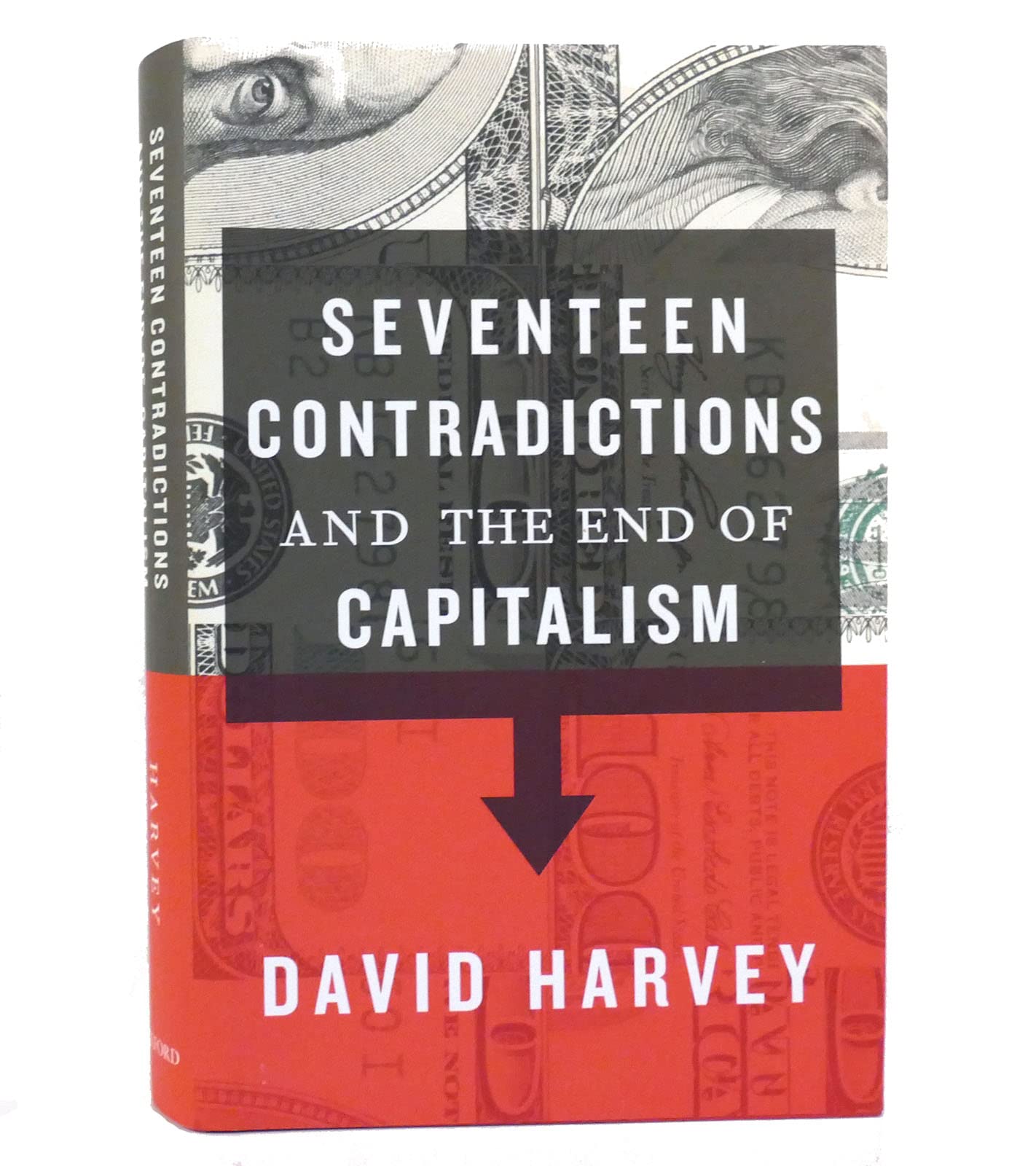
Seventeen Contradictions and the End of Capitalism
Seventeen Contradictions and the End of Capitalism
Couldn't load pickup availability
Seventeen Contradictions and the End of Capitalism
Book is in very good condition! There is only light wear. The pages are clean with no marks.
"The purpose of my inquiry is to gain a more comprehensive understanding of the contradictions inherent in capital, rather than a study of capitalism itself. I aim to discern the inner workings of the economic engine that is capitalism, and to explore the reasons behind its occasional inefficiencies and apparent imminent collapse. Furthermore, I intend to present arguments for why this economic engine should be replaced, and with what alternative. In contemporary Western society, capitalism pervades every aspect of our lives, and most individuals seldom question its presence, whether beneficial or detrimental. However, comprehending the factors that drive capitalism and contribute to its failures is crucial for assessing its long-term sustainability, as well as its significant global economic implications. Renowned scholar David Harvey, author of the notable publication A Brief History of Neoliberalism, tackles the internal contradictions within the movement of capital that have brought about recent crises. Harvey argues that while these contradictions have endowed capitalism with adaptability and resilience, they also harbor the potential for catastrophic systemic breakdown. While several of these contradictions can be managed, some are inherently fatal, such as the relentless pursuit of continuous growth, the imperative to exploit nature to its limits, and the tendency towards universal alienation. Throughout its history, capitalism has consistently expanded its domain through what Harvey refers to as "spatial fixes," encompassing nations and populations that were previously excluded from its reach. The question of whether capitalism can continue to expand remains open, however, Harvey deems it unlikely in the medium term future due to finite limits that cannot be extended much further. The recent financial crisis serves as a forewarning of this predicament. David Harvey is widely recognized as one of the world's most discerning critics of the global capitalist system and the resulting injustices. In this book, he returns to the foundational principles underpinning his entire body of work, dissecting and examining the inherent flaw in our economic system, while also offering insights into potential societal transformations in a post-capitalist world."
FEATURES