CROWN
IBM and the Holocaust: Alliance Between Nazi Germany and America's Most Powerful Corp
IBM and the Holocaust: Alliance Between Nazi Germany and America's Most Powerful Corp
Couldn't load pickup availability
IBM and the Holocaust: Alliance Between Nazi Germany and America's Most Powerful Corp
Book is in good condition! There is some wear that include s a ding on the back. The pages are clean with no marks.
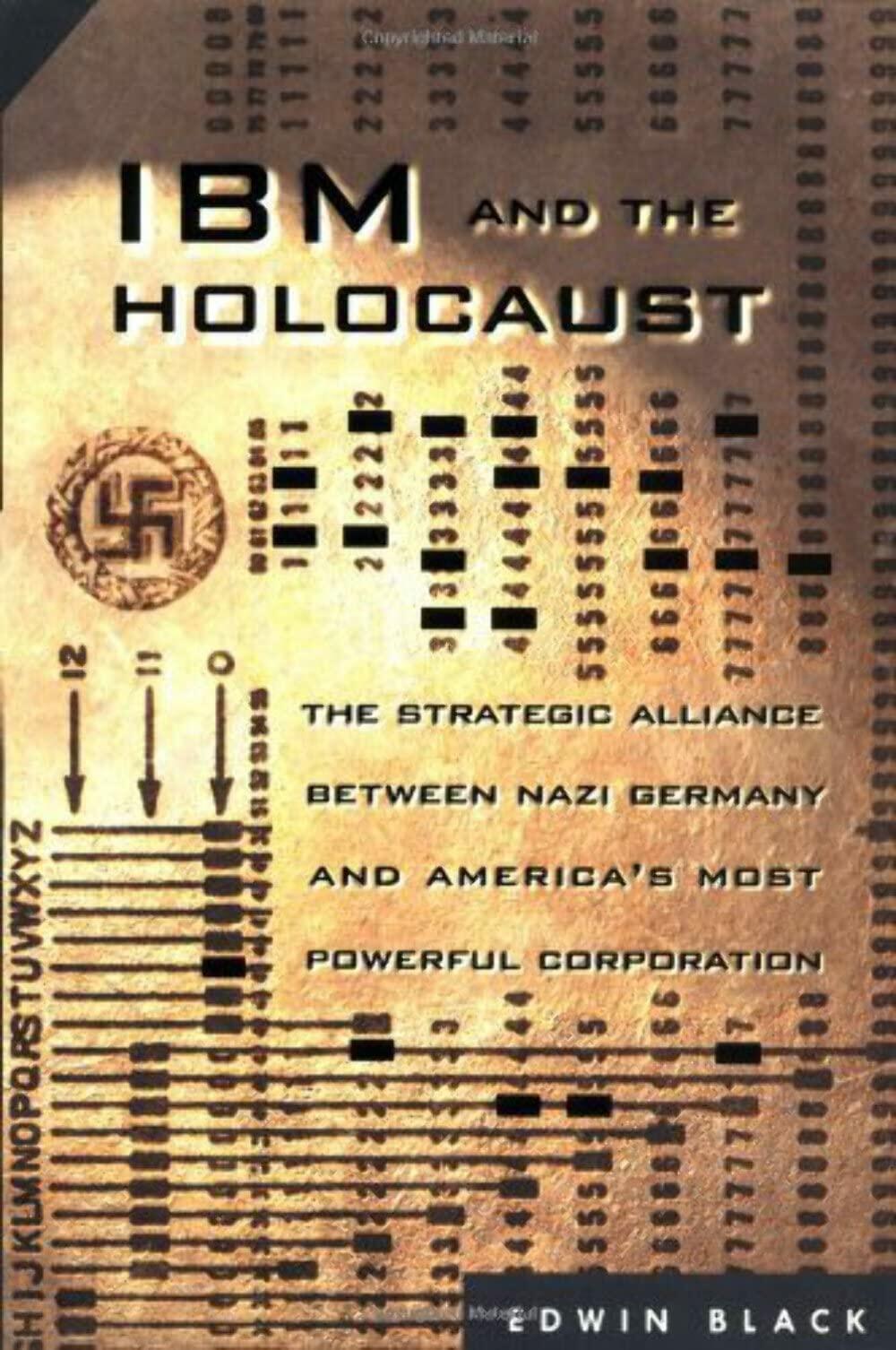
The narrative outlined in the provided text depicts the account of IBM's strategic collaboration with Nazi Germany, a partnership that was initiated in 1933 when Hitler ascended to power and persisted throughout the duration of World War II. As the Third Reich unfolded its agenda of territorial expansion and genocide, IBM and its affiliated entities played a significant role in developing instrumental technologies, commencing with the identification and categorization initiatives of the 1930s and evolving into the selection processes of the 1940s. The crucial procedure of identifying individuals of Jewish descent, a formidable and time-sensitive endeavor mandated by Hitler, enabled the efficacious execution of asset seizures, segregation into ghettos, forced deportations, enslavement for labor, and, ultimately, extermination. This intricate task of cross-referencing and organization on a monumental scale necessitated a computational solution. Despite the absence of computers in the 1930s, IBM leveraged its Hollerith punch card technology to assist in automating the persecution of the Jewish population under the Nazi regime. Historians have marveled at the rapidity and precision with which the Nazis could pinpoint and mobilize European Jewry. Until now, the full mosaic of this historical context has remained fragmentary. It is apparent that IBM's technology was instrumental in orchestrating a myriad of operations in Germany and later in Nazi-occupied Europe, ranging from the identification of Jewish citizens in official records, registrations, and genealogical endeavors to the logistical management of railway systems and the coordination of forced labor in concentration camps. IBM and its subsidiary in Germany devised customized, sophisticated solutions tailored to meet the demands of the Reich. Rather than merely supplying equipment and withdrawing, IBM leased these technologies at premium rates and monopolized the distribution of the billions of punch cards required by Hitler's regime. The narrative of "IBM and the Holocaust" elucidates the meticulously orchestrated collaboration between the corporate entity and the Third Reich, depicting the calculated ambiguity preserved through verbal agreements, undated correspondences, and intermediary channels like those in Geneva, all while reports of persecution and devastation dominated the headlines. Additionally, the account delves into the moral quandary embodied by IBM's founder, Thomas Watson, who overlooked ethical considerations in favor of financial gain by cooperating with the Nazi regime. It is evident that without IBM's technological contribution, Hitler would not have been able to execute the heinous scale of the Holocaust. Edwin Black's investigative work has unraveled one of the lingering enigmas surrounding Germany's systematic persecution of the Jewish population during the war the methods employed by Hitler to compile the names of his victims.
FEATURES